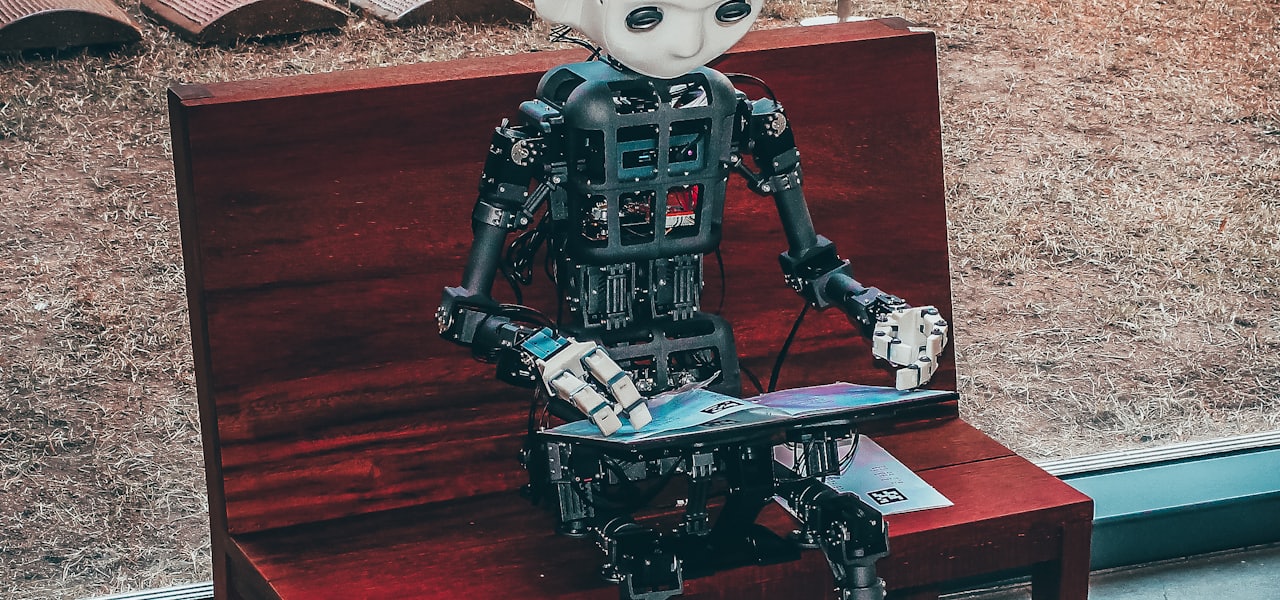
In machine learning, instance-based learning (sometimes called memory-based learning) is a family of learning algorithms that, instead of performing explicit generalization, compare new problem instances with instances seen in training, which have been stored in memory. Because computation is postponed until a new instance is observed, these algorithms are sometimes referred to as "lazy." It is called instance-based because it constructs hypotheses directly from the training instances themselves. This means that the hypothesis complexity can grow with the data: in the worst case, a hypothesis is a list of n training items and the computational complexity of classifying a single new instance is O(n). One advantage that instance-based learning has over other methods of machine learning is its ability to adapt its model to previously unseen data. Instance-based learners may simply store a new instance or throw an old instance away. Examples of instance-based learning algorithms are the k-nearest neighbors algorithm, kernel machines and RBF networks. These store (a subset of) their training set; when predicting a value/class for a new instance, they compute distances or similarities between this instance and the training instances to make a decision. To battle the memory complexity of storing all training instances, as well as the risk of overfitting to noise in the training set, instance reduction algorithms have been proposed.
The Drivers Cooperative
The Drivers Cooperative or Co-Op Ride is an American ridesharing company and mobile app that is a workers cooperative, owned collectively by the drivers. The cooperative launched in May 2021 in New York City, with the first 2,500 drivers issued their ownership certificates in a media event. The cooperative was co-founded by Grenadan immigrant and for hire vehicle driver Ken Lewis, labor organizer Erik Forman, and former Uber executive Alissa Orlando. Mohammad Hossen is the first member of the drivers' advisory board, which they plan to expand democratically as more drivers are onboarded. Other staff include software and industry veterans and in addition to co-founder Lewis, there are other drivers in management roles such as ex-driver and organizer David Alexis. The Co-Op Ride app is on the iOS and Android platforms and is built on Google Maps, Stripe, and Waze. By July, the app had been downloaded by 30,000 users and the number of drivers increased to 3,400, and by August there were 40,000 users. The cooperative is owned by the drivers themselves, and takes 15% from each ride for business overhead costs, as opposed to the 25% to 40% ride hail apps like Uber or Lyft take per ride. While being ultimately owned by the driver members, not by investors, the cooperative began with seed money from the Minnesota-based Community Development Financial Institution Shared Capital Cooperative, the local Lower East Side People's Federal Credit Union, and welcomed individual donations via crowdfunding in the form of revenue sharing debt on Wefunder. Each driver is a member of the cooperative and owns one share of the company and one vote in business and leadership decisions. In addition to a larger percentage of the fees per ride driven, each driver as a part-owner will also receive a share of the company's profits after loans and other expenses are paid, in the form of weighted dividends. The drivers use their own cars. The cooperative vets its owner-members further than what is already performed by the New York City Taxi and Limousine Commission (TLC), and gives a fixed price when a car is ordered and does not engage in surge pricing. The TLC imposed a minimum payrate for mobile app ridesharing companies operating in New York city in 2018. In 2021 that is $1.26 per mile which Uber and Lyft do not pay above; the cooperative pays a minimum mileage of $1.64. The cooperative intends to be able to set aside 10% of profits to community foundations and other non-profits and community organizations. The cooperative has engaged in advocacy around a policy agenda voted on by its members. Legislation to achieve this policy goal was introduced by State Senator Julia Salazar and Assemblymember Jessica González-Rojas, with the support of a coalition led by The Drivers Cooperative, United Auto Workers Region 9 and 9A, Sunrise Movement, New York Lawyers for the Public Interest, and New York Communities for Change.
Oculus Medium
Oculus Medium is a digital sculpting software that works with virtual reality headsets and 6DoF motion controllers. It is used to create and paint digital sculptures. Medium works only on Oculus Rift. It was released on December 5, 2016, following with a major update in 2018 introducing new features and a revamped UI. On December 9, 2019, Oculus Medium was acquired by Adobe and re-named to "Medium by Adobe".
Plotly
Plotly is a technical computing company headquartered in Montreal, Quebec, that develops online data analytics and visualization tools. Plotly provides online graphing, analytics, and statistics tools for individuals and collaboration, as well as scientific graphing libraries for Python, R, MATLAB, Perl, Julia, Arduino, JavaScript and REST. == History == Plotly was founded by Alex Johnson, Jack Parmer, Chris Parmer, and Matthew Sundquist. The founders' backgrounds are in science, energy, and data analysis and visualization. Early employees include Christophe Viau, a Canadian software engineer and Ben Postlethwaite, a Canadian geophysicist. Plotly was named one of the Top 20 Hottest Innovative Companies in Canada by the Canadian Innovation Exchange. Plotly was featured in "startup row" at PyCon 2013, and sponsored the SciPy 2018 conference. Plotly raised $5.5 million during its Series A funding, led by MHS Capital, Siemens Venture Capital, Rho Ventures, Real Ventures, and Silicon Valley Bank. The Boston Globe and Washington Post newsrooms have produced data journalism using Plotly. In 2020, Plotly was named a Best Place to Work by the Canadian SME National Business Awards, and nominated as Business of the Year. == Products == Plotly offers open-source and enterprise products. Dash is an open-source Python, R, and Julia framework for building web-based analytic applications. Many specialized open-source Dash libraries exist that are tailored for building domain-specific Dash components and applications. Some examples are Dash DAQ, for building data acquisition GUIs to use with scientific instruments, and Dash Bio, which enables users to build custom chart types, sequence analysis tools, and 3D rendering tools for bioinformatics applications. Dash Enterprise is Plotly's paid product for building, testing, deploying, managing and scaling Dash applications organization-wide. Chart Studio Cloud is a free, online tool for creating interactive graphs. It has a point-and-click graphical user interface for importing and analyzing data into a grid and using stats tools. Graphs can be embedded or downloaded. Chart Studio Enterprise is a paid product that allows teams to create, style, and share interactive graphs on a single platform. It offers expanded authentication and file export options, and does not limit sharing and viewing. Data visualization libraries Plotly.js is an open-source JavaScript library for creating graphs and powers Plotly.py for Python, as well as Plotly.R for R, MATLAB, Node.js, Julia, and Arduino and a REST API. Plotly can also be used to style interactive graphs with Jupyter notebook. Figure converters which convert matplotlib, ggplot2, and IGOR Pro graphs into interactive, online graphs. == Data visualization libraries == Plotly provides a collection of supported chart types across several programming languages: == Dash == Dash is a Python framework built on top of React, a JavaScript library. Dash also works for R, and most recently supports Julia. While still described as a Python framework, Python isn't used for the other languages: "... describing Dash as a Python framework misses a key feature of its design: the Python side (the back end/server) of Dash was built to be lightweight and stateless [allowing] multiple back-end languages to coexist on an equal footing". It is possible to integrate D3.js charts as Dash components. Dash provides the default CSS (plus HTML and JavaScript), but for custom styling Dash applications, CSS can be added, or Dash Enterprise used. === Dash Enterprise === Dash Enterprise is Plotly's paid product for building, testing, deploying, managing and scaling Dash applications organization-wide. The product integrates with enterprise IT systems to enable organizations to build, deploy and scale low-code Dash applications. With open-source Dash, analytic applications can be run from a local machine, but cannot be easily accessed by others in the organization. ==== Enterprise IT integration ==== Dash Enterprise installs on cloud environments and on-premises. Amazon Web Services, Google Cloud Platform, and Microsoft Azure are supported, as are multiple Linux on-premises servers. Authentication integrations include LDAP, AD, PKI, Okta, SAML, OAuth2, SSO, and email authentication, and Dash application access is managed through a GUI rather than code. Dash Enterprise connects to major big data backends, including Salesforce, PostgreSQL, Databricks via PySpark, Snowflake, Dask, Datashader, and Vaex. In 2020, Plotly partnered with NVIDIA to integrate Dash with RAPIDS, and NVIDIA participated in Plotly's Series C funding round. ==== Low-code capabilities ==== Dash Enterprise enables low-code development of Dash applications, which is not possible with open-source Dash. Enterprise users can write applications in multiple development environments, including Jupyter Notebook. Dash Enterprise ships with several “development engines” for drag-and-drop application editing, application design, and automated reporting, as well as dozens of artificial intelligence and machine learning application templates. ==== Deployment and scaling ==== Dash application code is deployed to Dash Enterprise using the git-push command. Dash application deployments are containerized to avoid dependency conflicts, and can be embedded in existing web platforms without iframes. Deployed applications can be managed and accessed in a single portal called App Manager, where administrators can control user authentication and view usage analytics. Dash Enterprise scales horizontally with Kubernetes. Jobs queuing, GPU acceleration, and CPU parallelization support high performance computing requirements. Plotly also offers professional services for application development and workshop training.
Adobe Encore
Adobe Encore (previously Adobe Encore DVD) was a DVD authoring software tool produced by Adobe Systems and targeted at professional video producers. Video and audio resources could be used in their current format for development, allowing the user to transcode them to MPEG-2 video and Dolby Digital audio upon project completion. DVD menus could be created and edited in Adobe Photoshop using special layering techniques. Adobe Encore did not support writing to a Blu-ray Disc using AVCHD 2.0. Encore is bundled with Adobe Premiere Pro CS6. Adobe Encore CS6 was the last release. While Premiere Pro CC has moved to the Creative Cloud, Encore has now been discontinued. == Licensing == All forms of Adobe Encore used a proprietary licensing system from its developer, Adobe Systems. Versions 1.0 and 1.5 required a separate license fee (rather than making 1.5 available as a free update). Version 3, also known as CS3, was sold only in bundle with Premiere CS3. Encore CS4, CS5, CS5.5 and CS6 were only sold in the Premiere Pro CS4, CS5, CS5.5 and CS6 bundles, respectively. Adobe CC subscribers no longer have access to Adobe Encore CS6. Adobe Encore is not included with Premiere Pro CC. == Functionality == Adobe Encore allowed for creating interactive DVD menus from Photoshop documents, which could be tweaked from within Encore. Video and audio streams could be embedded in the DVD and be made to play when certain elements of the menu are interacted with. It had similar functionality to Adobe Flash and Premiere Pro, due to its ability to both edit video on a timeline and embed interactive content.
Data augmentation
Data augmentation is a statistical technique which allows maximum likelihood estimation from incomplete data. Data augmentation has important applications in Bayesian analysis, and the technique is widely used in machine learning to reduce overfitting when training machine learning models, achieved by training models on several slightly-modified copies of existing data. == Synthetic oversampling techniques for traditional machine learning == Synthetic Minority Over-sampling Technique (SMOTE) is a method used to address imbalanced datasets in machine learning. In such datasets, the number of samples in different classes varies significantly, leading to biased model performance. For example, in a medical diagnosis dataset with 90 samples representing healthy individuals and only 10 samples representing individuals with a particular disease, traditional algorithms may struggle to accurately classify the minority class. SMOTE rebalances the dataset by generating synthetic samples for the minority class. For instance, if there are 100 samples in the majority class and 10 in the minority class, SMOTE can create synthetic samples by randomly selecting a minority class sample and its nearest neighbors, then generating new samples along the line segments joining these neighbors. This process helps increase the representation of the minority class, improving model performance. == Data augmentation for image classification == When convolutional neural networks grew larger in mid-1990s, there was a lack of data to use, especially considering that some part of the overall dataset should be spared for later testing. It was proposed to perturb existing data with affine transformations to create new examples with the same labels, which were complemented by so-called elastic distortions in 2003, and the technique was widely used as of 2010s. Data augmentation can enhance CNN performance and acts as a countermeasure against CNN profiling attacks. Data augmentation has become fundamental in image classification, enriching training dataset diversity to improve model generalization and performance. The evolution of this practice has introduced a broad spectrum of techniques, including geometric transformations, color space adjustments, and noise injection. === Geometric Transformations === Geometric transformations alter the spatial properties of images to simulate different perspectives, orientations, and scales. Common techniques include: Affine Transformation Rotation: Rotating images by a specified degree to help models recognize objects at various angles. Reflection: Reflecting images horizontally or vertically to introduce variability in orientation. Translation: Shifting images in different directions to teach models positional invariance. Scaling Shear Mapping Cropping: Removing sections of the image to focus on particular features or simulate closer views. Elastic Distortion Morphing within the same class: Generating new samples by applying morphing techniques between two images belonging to the same class, thereby increasing intra-class diversity. === Color Space Transformations === Color space transformations modify the color properties of images, addressing variations in lighting, color saturation, and contrast. Techniques include: Brightness Adjustment: Varying the image's brightness to simulate different lighting conditions. Contrast Adjustment: Changing the contrast to help models recognize objects under various clarity levels. Saturation Adjustment: Altering saturation to prepare models for images with diverse color intensities. Color Jittering: Randomly adjusting brightness, contrast, saturation, and hue to introduce color variability. === Noise Injection === Injecting noise into images simulates real-world imperfections, teaching models to ignore irrelevant variations. Techniques involve: Gaussian Noise: Adding Gaussian noise mimics sensor noise or graininess. Salt and Pepper Noise: Introducing black or white pixels at random simulates sensor dust or dead pixels. == Data augmentation for signal processing == Residual or block bootstrap can be used for time series augmentation. === Biological signals === Synthetic data augmentation is of paramount importance for machine learning classification, particularly for biological data, which tend to be high dimensional and scarce. The applications of robotic control and augmentation in disabled and able-bodied subjects still rely mainly on subject-specific analyses. Data scarcity is notable in signal processing problems such as for Parkinson's Disease Electromyography signals, which are difficult to source - Zanini, et al. noted that it is possible to use a generative adversarial network (in particular, a DCGAN) to perform style transfer in order to generate synthetic electromyographic signals that corresponded to those exhibited by sufferers of Parkinson's Disease. The approaches are also important in electroencephalography (brainwaves). Wang, et al. explored the idea of using deep convolutional neural networks for EEG-Based Emotion Recognition, results show that emotion recognition was improved when data augmentation was used. A common approach is to generate synthetic signals by re-arranging components of real data. Lotte proposed a method of "Artificial Trial Generation Based on Analogy" where three data examples x 1 , x 2 , x 3 {\displaystyle x_{1},x_{2},x_{3}} provide examples and an artificial x s y n t h e t i c {\displaystyle x_{synthetic}} is formed which is to x 3 {\displaystyle x_{3}} what x 2 {\displaystyle x_{2}} is to x 1 {\displaystyle x_{1}} . A transformation is applied to x 1 {\displaystyle x_{1}} to make it more similar to x 2 {\displaystyle x_{2}} , the same transformation is then applied to x 3 {\displaystyle x_{3}} which generates x s y n t h e t i c {\displaystyle x_{synthetic}} . This approach was shown to improve performance of a Linear Discriminant Analysis classifier on three different datasets. Current research shows great impact can be derived from relatively simple techniques. For example, Freer observed that introducing noise into gathered data to form additional data points improved the learning ability of several models which otherwise performed relatively poorly. Tsinganos et al. studied the approaches of magnitude warping, wavelet decomposition, and synthetic surface EMG models (generative approaches) for hand gesture recognition, finding classification performance increases of up to +16% when augmented data was introduced during training. More recently, data augmentation studies have begun to focus on the field of deep learning, more specifically on the ability of generative models to create artificial data which is then introduced during the classification model training process. In 2018, Luo et al. observed that useful EEG signal data could be generated by Conditional Wasserstein Generative Adversarial Networks (GANs) which was then introduced to the training set in a classical train-test learning framework. The authors found classification performance was improved when such techniques were introduced. === Mechanical signals === The prediction of mechanical signals based on data augmentation brings a new generation of technological innovations, such as new energy dispatch, 5G communication field, and robotics control engineering. In 2022, Yang et al. integrate constraints, optimization and control into a deep network framework based on data augmentation and data pruning with spatio-temporal data correlation, and improve the interpretability, safety and controllability of deep learning in real industrial projects through explicit mathematical programming equations and analytical solutions.
Inpainting
Inpainting is a conservation process where damaged, deteriorated, or missing parts of an artwork are filled in to present a complete image. This process is commonly used in image restoration. It can be applied to both physical and digital art mediums such as oil or acrylic paintings, chemical photographic prints, sculptures, or digital images and video. With its roots in physical artwork, such as painting and sculpture, traditional inpainting is performed by a trained art conservator who has carefully studied the artwork to determine the mediums and techniques used in the piece, potential risks of treatments, and ethical appropriateness of treatment. == History == The modern use of inpainting can be traced back to Pietro Edwards (1744–1821), Director of the Restoration of the Public Pictures in Venice, Italy. Using a scientific approach, Edwards focused his restoration efforts on the intentions of the artist. It was during the 1930 International Conference for the Study of Scientific Methods for the Examination and Preservation of Works of Art, that the modern approach to inpainting was established. Helmut Ruhemann (1891–1973), a German restorer and conservator, led the discussions on the use of inpainting in conservation. Helmut Ruhemann was a leading figure in modernizing restoration and conservation. His greatest contribution to the field of conservation "was his insistence on following the methods of the original painter exactly, and on understanding the painter's artistic intention". After his career of over 40 years as a conservator, Ruhemann published his treatise The Cleaning of Paintings: Problems & Potentialities in 1968. In describing his method, Ruhemann states that "The surface [of the fill] should be slightly lower than that of the surrounding paint to allow for the thickness of the inpainting...Inpainting medium should look and behave like the original medium, but must not darken with age." Cesare Brandi (1906–1988) developed the teoria del restauro, the inpainting approach combining aesthetics and psychology. However, this approach was used primarily by Italian restorers and conservators, with the terminology becoming widespread in the 1990s. Technological advancements led to new applications of inpainting. Widespread use of digital techniques range from entirely automatic computerized inpainting to tools used to simulate the process manually. Since the mid-1990s, the process of inpainting has evolved to include digital media. More commonly known as image or video interpolation, a form of estimation, digital inpainting includes the use of computer software that relies on sophisticated algorithms to replace lost or corrupted parts of the image data. == Ethics == In order to preserve the integrity of an original artwork, any inpainting technique or treatment applied to physical or digital work should be reversible or distinguishable from the original content of the artwork. Prior to any treatments, conservators proceed according to the American Institute of Conservation of Historical and Artistic Works. There are several ethic considerations before Inpainting can be justified. Various deliberation decisions over the ethical appropriateness of the amount and type of inpainting done, resides on many factors. As most conservation treatments, inpainting's ethical questions rest mainly with authenticity, reversibility and documentation.Any intervention to compensate for loss should be documented in treatment records and reports and should be detectable by common examination methods. Such compensation should be reversible and should not falsely modify the known aesthetic, conceptual, and physical characteristics of the cultural property, especially by removing or obscuring original material.New technologies and the aesthetic demand for perfect images without imperfections challenge conservators' ethical practices to protect the integrity of originals. == Methods == Inpainting methods and techniques depend on the desired goal and type of image being treated. Treatments to fill in the gaps are different between physical and digital art. In inpainting, detailed records of the initial state of the images can help with the treatment and replicate the original closer. === Physical inpainting === Inpainting is rooted in the conservation and restoration of paintings. Inpainting can aim to make a visual improvement to the artwork as a whole by repairing missing or damaged parts using methods and materials equivalent to the original artist's work. ==== Application techniques ==== By studying the painting methods of various artists and the composition of paints used historically, conservators are able to restore works very closely to their original visual appearance. The picture as a whole determines how to fill in the gap. Helmut Ruhemann's inpainting techniques by Jessell have procedures to "preserve" the quality of oil and tempera paintings. === Digital inpainting === Many programs are able to reconstruct missing or damaged areas of digital photographs and videos. Most widely known for use with digital images is Adobe Photoshop. Given the various abilities of the digital camera and the digitization of old photos, inpainting has become an automatic process that can be performed on digital images. The inpainting techniques can be applied to object removal, text removal, and other automatic modifications of images and videos. In video special effects, inpainting is usually performed after video matting. They can also be observed in applications like image compression and super-resolution. In photography and cinema, it is used for film restoration to reverse, repair, or mitigate deterioration (e.g., physical damage such as cracks in photographs, scratches and dust spots in film, or chemical damage resulting in image loss; performed infrared cleaning). It can also be used for removing red-eye, the stamped date from photographs, and objects for creative effect. This technique can be used to replace any lost blocks in the coding and transmission of images, for example, in a streaming video. It can also be used to remove logos or watermarks in videos. Deep learning neural network-based inpainting can be used for decensoring images. Deep image prior-based techniques can be used for digital image inpainting, where a trained deep learning model is either unavailable or infeasible. Deep models for visual content generation, like text-to-image or text-to-video, learn complex priors over the distribution of visual content, and can be used to inpaint missing parts. For example, videos can be separated into layers, using a technique called omnimatte, which either pretrain an omnimatte model or without any training using an omnimatte-zero model. Three main groups of 2D image-inpainting algorithms can be found in the literature. The first one to be noted is structural (or geometric) inpainting, the second one is texture inpainting, the last one is a combination of these two techniques. They use the information of the known or non-destroyed image areas in order to fill the gap, similar to how physical images are restored. ==== Structural ==== Structural or geometric inpainting is used for smooth images that have strong, defined borders. There are many different approaches to geometric inpainting, but they all come from the idea that geometry can be recovered from similar areas or domains. Bertalmio proposed a method of structural inpainting that mimics how conservators address painting restoration. Bertalmio proposed that by progressively transferring similar information from the borders of an inpainting domain inwards, the gap can be filled. ==== Textural ==== While structural/geometric inpainting works to repair smooth images, textural inpainting works best with images that are heavily textured. Texture has a repetitive pattern which means that a missing portion cannot be restored by continuing the level lines into the gap; level lines provide a complete, stable representation of an image. To repair texture in an image, one can combine frequency and spatial domain information to fill in a selected area with a desired texture. This method, while the most simple and very effective, works well when selecting a texture to be in-painted. For a texture that covers a wider area or a larger frame one would have to go through the image segmenting the areas to be in-painted and selecting the corresponding textures from throughout the image; there are programs that can help find the corresponding areas that work in a similar way as 'find and replace' works in a word processor. ==== Combined structural and textural ==== Combined structural and textural inpainting approaches simultaneously try to perform texture- and structure-filling in regions of missing image information. Most parts of an image consist of texture and structure and the boundaries between image regions contain a large amount of structural information. This is the result when blending differ